which is the best mortgage type?
Buying a home is one of the biggest financial decisions you’ll ever make. While choosing between a fixed-rate and a variable-rate mortgage is important, it’s equally important to understand the additional costs that come with purchasing a home. Planning for these expenses can help you avoid surprises and keep your budget on track.
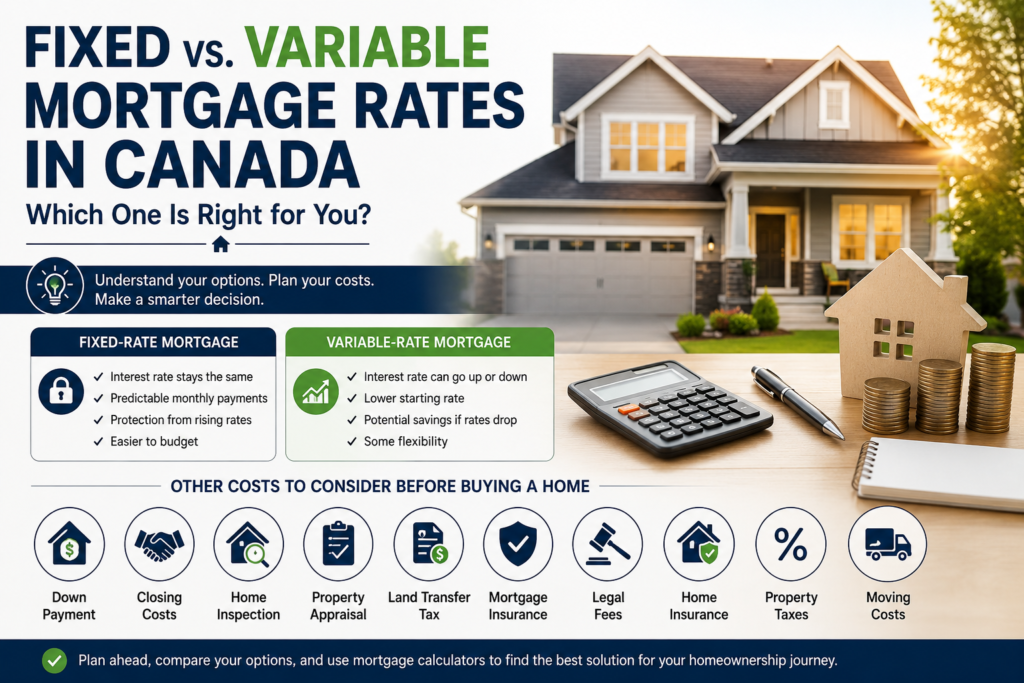
What Is a Fixed-Rate Mortgage?
A fixed-rate mortgage has an interest rate that stays the same throughout the mortgage term. Your regular payments remain consistent, making it easier to budget and plan your finances.
Benefits of a Fixed-Rate Mortgage
- Predictable monthly payments
- Protection if interest rates rise
- Easier financial planning
- Greater peace of mind
This option is ideal for buyers who prefer stability and don’t want to worry about changing interest rates.
What Is a Variable-Rate Mortgage?
A variable-rate mortgage has an interest rate that can change over time, usually based on the lender’s prime rate. If rates fall, you could save money. If they increase, your borrowing costs may rise.
Benefits of a Variable-Rate Mortgage
- Often starts with a lower interest rate
- Potential savings when rates remain low
- May offer greater flexibility depending on the lender
However, buyers should be comfortable with the possibility of fluctuating payments or interest costs.
Other Costs to Budget for Before Buying a Home
Many first-time homebuyers focus only on the down payment and monthly mortgage. In reality, there are several other expenses to consider before closing on your new home.
Down Payment
Your down payment is the amount you pay upfront toward the purchase price. The larger your down payment, the less you’ll need to borrow.
Closing Costs
Closing costs typically range from 1.5% to 4% of the home’s purchase price. These may include legal fees, title registration, and other administrative costs.
Home Inspection Fee
A professional home inspection can identify structural or mechanical issues before you finalize your purchase. While optional in some situations, it’s a worthwhile investment for most buyers.
Property Appraisal
Some lenders require an appraisal to confirm the home’s market value before approving the mortgage.
Land Transfer Tax
Depending on your province, you may need to pay a land transfer tax. Some first-time homebuyers may qualify for rebates.
Mortgage Default Insurance
If your down payment is less than 20%, mortgage default insurance is generally required. This cost is often added to your mortgage rather than paid upfront.
Legal and Notary Fees
You’ll need a lawyer or notary to complete the purchase, review documents, and transfer ownership.
Property Tax Adjustments
You may need to reimburse the seller for prepaid property taxes covering the remainder of the tax year.
Home Insurance
Most lenders require proof of home insurance before your mortgage is funded.
Utility Setup and Moving Costs
Don’t forget expenses such as moving services, utility connections, internet installation, and changing your address.
Emergency Fund
It’s wise to keep extra savings available for unexpected repairs or maintenance after moving into your new home.
Use Mortgage Calculators Before Making a Decision
Mortgage calculators can help you estimate monthly payments, compare fixed and variable rates, calculate affordability, and understand how different down payments affect your borrowing costs. They are valuable tools for making informed financial decisions before purchasing a home.
Conclusion
Whether you choose a fixed-rate or variable-rate mortgage, understanding the total cost of homeownership is essential. Looking beyond the mortgage payment and budgeting for closing costs, insurance, taxes, inspections, and moving expenses can help make your home-buying experience much smoother.
Careful planning today can help you avoid financial surprises tomorrow and give you greater confidence as you take the next step toward owning your home.